Loose Implant Crown: Arranging an Assessment
- Do not tighten the screw or try to remove the crown yourself.
- Mobility of different components means different situations.
- Prepare data about the installed system.
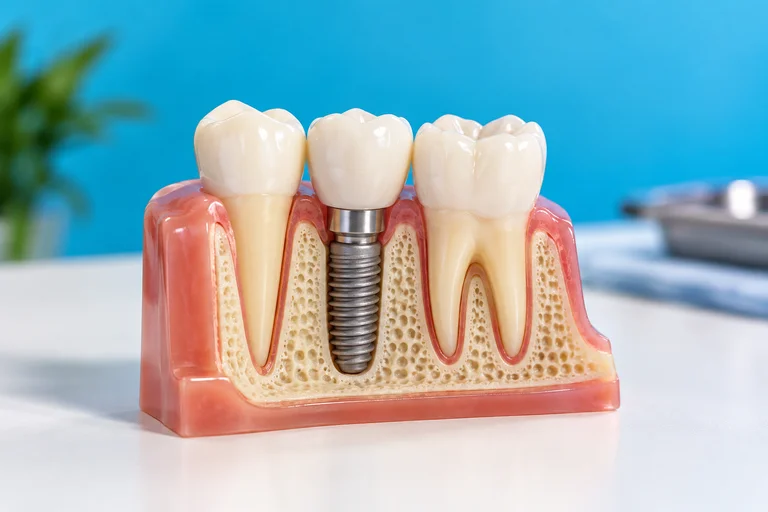
A crown on an implant has started to move or has changed to the touch. Do not tighten anything yourself: mobility of different parts of the restoration is not the same thing, and the cause is determined by the dentist.
Which change has become noticeable
Describe it: the crown moves, a click is heard, the bite has changed, bleeding has appeared. The more precise the description, the easier it is.
Which documents about the system are needed
- The implant passport, if you have one.
- The name of the system and the clinic where it was placed.
- The date of placement of the implant and the crown.
- X-rays, if kept.
This information helps to choose compatible components.
Why the cause of mobility is determined by the dentist
What moves may be the crown relative to the abutment, the abutment itself or, more rarely, the implant. For the patient it feels similar, but the causes and actions differ. Do not conclude that the implant is necessarily lost.
How further work is agreed after the check
Depending on the findings the dentist will offer further steps. Do not expect a final answer before the examination.
Data for booking
- What exactly moves (by feel)
- Date of placement and where
- Name of the implant system
- Implant passport
- Pain, bleeding, smell
- What changed at the same time
Call and tell the administrator this.
Questions and answers
Is mobility of all parts of the restoration interpreted the same way?
No. Mobility of the crown, the abutment and the implant are different situations; only the dentist can tell them apart.
What information about the installed system should I bring?
The implant passport, the name of the system, the clinic and the date of placement, and X-rays, if any.
Read also
A Dental Bridge Feels Loose: What to Report
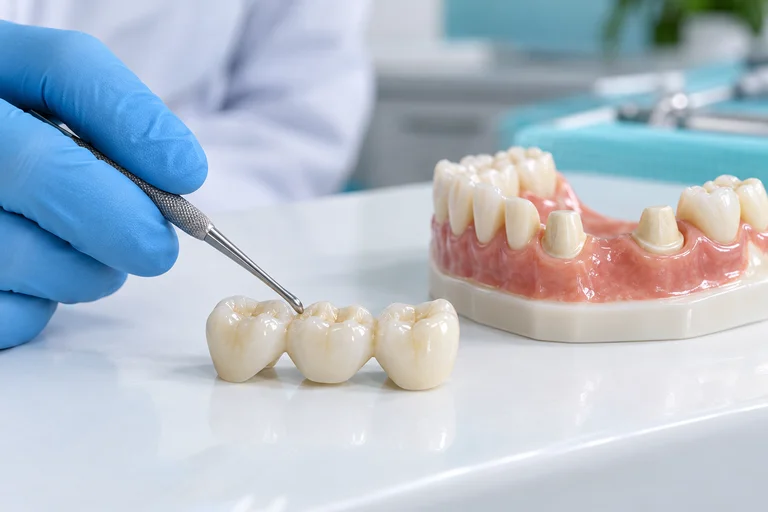
Dentika in Lutsk: describing movement in an existing bridge when arranging an appointment. Information for your restorative consultation.

Implant Overdenture: Checking Retentive Components
Dentika in Lutsk: changes in an existing overdenture’s retention and compatible components. Information for your restorative consultation.
Lost Implant Records: What Your Restorative Dentist Needs
Dentika in Lutsk: finding information about an existing implant system before restoration or maintenance. Information for your restorative consultation.
The material is for reference and does not replace a doctor’s consultation. The text was prepared by the site editors; review by a clinic doctor is in progress.