
Food Traps Beside a Crown: What to Check
- The place where food gets trapped — crown and tooth, or the pontic of a bridge — matters for the examination.
- The contact between teeth, the margin of the restoration and the gum are assessed separately.
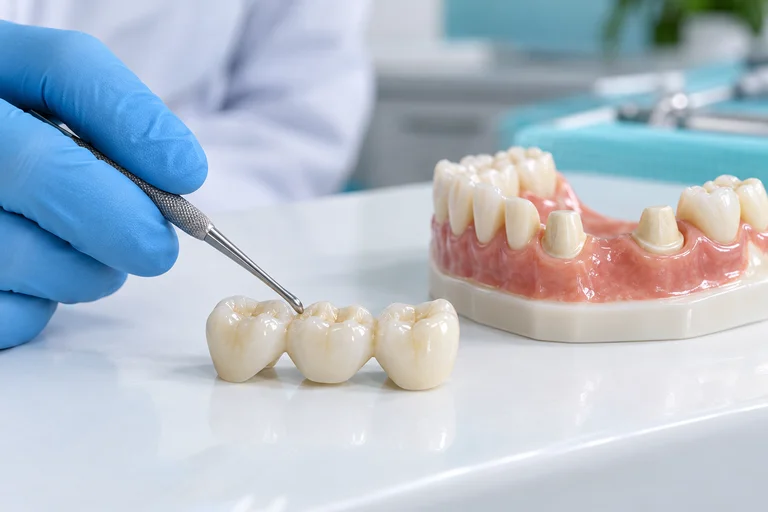
- A photo does not replace an examination, but it helps to describe the problem.
Food getting stuck between a crown and a tooth is a common complaint, but there can be several causes. To help the dentist find the right place faster, it is useful to describe in advance where exactly it happens.

Where exactly food is trapped
Food can get stuck in different places: between the crown and the neighbouring tooth, at the crown margin near the gum, or under the pontic of a bridge. For the dentist these are different situations with different ways of checking.
Try to identify the side, the jaw and the type of food that gets stuck most often: fibrous meat, seeds, small pieces.
Contact, margin and gum: different areas of the examination
The contact is where the crown touches the neighbouring tooth. If it is weak, food passes into the gap. The margin is the border between the crown and your own tooth: there may be roughness or a gap here. The gum — its level and shape affect the space where food goes.
The dentist assesses these areas separately because the further plan depends on it. It is difficult to determine the cause by feeling alone.
What to say about when the problem appeared
It matters whether the problem was there from the start after cementation or appeared later. New trapping after some time may point to changes the dentist will assess at the examination.
- When you first noticed the problem.
- Whether there is a bad smell, bleeding gums or pain.
- Whether you had to use a toothpick or interdental brush and how it helps.
What further steps to discuss after the assessment
After the examination the dentist will explain the cause and offer options. They depend on the situation and may range from adjustment to a different plan. Do not expect promises about a specific method before the examination.
Agree on a follow-up visit to check the result.
Scheme for describing where food is trapped
- The tooth or bridge pontic where food gets stuck
- Upper or lower jaw, right or left side
- Type of food that gets stuck
- Any bleeding, smell or pain
- When the problem appeared (at once or later)
- What helps temporarily (without filing anything down yourself)
Bring the completed scheme to your appointment.
Questions and answers
Why is it important to specify where food gets trapped?
Because it determines what the dentist checks: the contact with the neighbouring tooth, the crown margin, the condition of the gum or the space under the bridge pontic.
Is a photo enough to determine the cause?
No. A photo helps to show the place, but the cause is determined at an examination assessing the contacts, the margin of the restoration and the tissues.
Read also
Gum Recession Beside a Crown: Arranging a Check
Dentika in Lutsk: reviewing changes beside an existing crown and any need for another specialist. Information for your restorative consultation.
A Dental Bridge Feels Loose: What to Report
Dentika in Lutsk: describing movement in an existing bridge when arranging an appointment. Information for your restorative consultation.

Denture Review: A Symptom Diary for Your Visit
Dentika in Lutsk: a structured note on fit, speech and chewing for a specific review. Information for your restorative consultation.
The material is for reference and does not replace a doctor’s consultation. The text was prepared by the site editors; review by a clinic doctor is in progress.